The post Alaya Consulting and Unwritten Join Forces in Hong Kong and China to Advance Climate Scenario Quantitative Analysis Across Asia appeared first on ESG Reporting and Carbon Advisory in Hong Kong.
]]>As climate-related risks become increasingly material, companies and investors face growing pressure to move beyond qualitative narratives toward credible, quantitative insights. At the same time, many organisations still face a common challenge: they are not sure where to start—what to scope, what to prioritise, how to quantify exposure, and how to translate scenario results into practical actions and disclosures.
Human Expertise Meets AI Analytics
By integrating human judgement and sector expertise with AI-enabled analytics, the partnership bridges the gap between disclosure and decision-making. The joint offering is designed to support clients in producing outputs that are auditable, repeatable, and management-ready, aligned with leading frameworks and market expectations, including ISSB/IFRS S2, TCFD, and NGFS scenarios.
“Climate risk is no longer just a reporting topic—it is a financial, operational, and strategic priority,” said Tony Wong, Founder of Alaya Consulting. “This partnership brings together the strengths of both teams to help clients move from not sure where to start to a clear, actionable roadmap—grounded in quantitative scenario analysis and built for real-world decisions.”
“Organisations increasingly need asset-level insight they can trust and use,” said Alex Spencer, Head of Sales at Unwritten. “By combining Unwritten’s location-based quantitative modelling with Alaya’s advisory expertise, we can help clients meet compliance and investor requirements while prioritising resilience business strategies”
What the Partnership Delivers
Through this collaboration, clients gain access to an integrated solution that combines strategic advisory with science-based modelling, including: asset-level climate risk quantification across geographies; scenario analysis under different climate pathways and time horizons (including NGFS-aligned scenarios); assessment of physical, transition, and nature-related risks; support for climate-related disclosure and reporting aligned to IFRS S2; and actionable insights to prioritise resilience and adaptation measures. The offering also includes practical implementation support such as scoping, materiality screening, data readiness, and decision-useful outputs.
The solution is especially relevant for asset-intensive sectors such as real estate, infrastructure, logistics, manufacturing, and investment portfolios.
Enabling Resilient, Transition-Ready Organisations
By integrating strategy with advanced modelling, Alaya Consulting and Unwritten help organisations move from climate awareness to action—enhancing transparency, strengthening resilience, and supporting better financial and strategic decision-making in an increasingly climate-driven environment.
The post Alaya Consulting and Unwritten Join Forces in Hong Kong and China to Advance Climate Scenario Quantitative Analysis Across Asia appeared first on ESG Reporting and Carbon Advisory in Hong Kong.
]]>The post China Emerges as a Key Growth Engine for SBTi appeared first on ESG Reporting and Carbon Advisory in Hong Kong.
]]>By the end of 2025, 12,353 companies worldwide had either validated science-based targets or committed to set them, with 9,764 holding validated targets—a 40% year-on-year increase. Net-zero ambition is rising even faster, with validated net-zero targets growing 61% globally. Yet within this global expansion, China’s trajectory is particularly striking.
China Nearly Doubles Its Target Adoption
China recorded 92% growth in companies with validated science-based targets between 2024 and 2025—one of the highest rates among major economies. The total number of Chinese companies with validated targets rose from 312 to 598, positioning China fourth globally behind Japan, the United Kingdom, and the United States.
This growth reflects a critical shift. Historically, Europe dominated science-based target adoption, but 2025 signals a rebalancing. Asia grew 53% overall, the highest of any region, and China was a primary engine of that expansion. As the world’s largest emitter and a central node in global supply chains, China’s increasing participation materially strengthens the credibility and scale of corporate climate alignment worldwide.
Sectoral Transformation in China
China’s growth is not only broad-based—it is strategically concentrated in high-impact sectors. Information Technology surged 145%, rising from 33 to 81 companies with validated targets. Consumer Staples doubled (+100%), while Consumer Discretionary grew 87%.
This pattern highlights two important dynamics. First, climate alignment is expanding into technology and advanced manufacturing—industries that shape global innovation and supply networks. Second, consumer-facing sectors are increasingly integrating science-based targets, signaling rising market and investor expectations around climate transparency and performance.
Unlike Japan, where Materials led sectoral growth, or India, where Health Care expanded most rapidly, China’s acceleration in technology underscores its distinctive economic structure and its growing role in low-carbon innovation.
Expanding Influence Across Asia and Beyond
China’s surge also complements strong performance across Asia’s emerging markets. Indonesia and Pakistan posted growth rates above 90%, while Taiwan and India achieved substantial gains. Together, these trends suggest that climate ambition in Asia is moving from early adopters to broader regional integration.
Financial market penetration reinforces this shift. Nearly half of companies in Japan’s Nikkei 225 now hold targets or commitments, and adoption among major global indices continues to deepen—placing additional pressure on multinational firms operating in China to align with science-based pathways.
A Strategic Inflection Point
More than halfway through the decisive decade for climate action, China’s accelerating adoption of science-based targets represents a strategic inflection point. As Chinese companies embed climate targets into corporate strategy—particularly in technology and consumer sectors—they not only reduce domestic emissions but also influence global value chains.
The 2025 data make one conclusion clear: China is no longer on the sidelines of corporate climate leadership. It is becoming one of its central pillars.
 Visit our website to explore case studies on how Chinese companies are successfully setting and implementing SBTi-aligned targets.
The post China Emerges as a Key Growth Engine for SBTi appeared first on ESG Reporting and Carbon Advisory in Hong Kong.
]]>The post EU Omnibus Package: What It Means for Hong Kong and China Businesses appeared first on ESG Reporting and Carbon Advisory in Hong Kong.
]]>For businesses in Hong Kong and mainland China exporting into the EU, and for large EU companies operating in China, the proposals are important. The overall effect is likely to be a more targeted compliance framework — but not a retreat from sustainability regulation.
| The Omnibus package points to simplification, not deregulation.
Reduced disclosure pressure under CSRD
One of the headline proposals is a major reduction in the number of companies subject to mandatory CSRD reporting. The Commission expects the changes could cut the in-scope population by around 80%, with the regime refocused primarily on larger undertakings with more than 1,000 employees.
For some Hong Kong and China-based groups, this may reduce the prospect of falling directly within the EU sustainability reporting regime. Non-EU turnover thresholds would also increase, which may further limit direct application to overseas businesses.
However, indirect pressure is likely to remain. Even if suppliers in Hong Kong or China are not themselves required to report under the CSRD, they may still receive information requests from EU customers needing sustainability data for their own compliance purposes.
| Many Asia-based businesses may fall outside direct reporting scope, but still remain within the EU compliance ecosystem.
Value-chain requests may become more manageable
The package would also strengthen protections against excessive value-chain reporting requests. This is particularly relevant for suppliers in China that have faced increasingly detailed ESG questionnaires from European customers.
If adopted, the new approach could help curb disproportionate data demands from large in-scope companies, especially for businesses with up to 1,000 employees. That may ease some administrative burden across regional supply chains.
CBAM remains a key issue for exporters
For exporters of carbon-intensive goods, CBAM remains the most commercially relevant EU measure. The proposed changes would simplify compliance and exempt small importers below a new de minimis threshold. But the core mechanism remains firmly in place.
That means Hong Kong and China exporters in sectors such as steel, aluminium, cement and related products should continue preparing to provide reliable emissions data to EU importers and customers.
| For carbon-intensive exporters, the compliance burden may be lighter — but the need for credible emissions data is not going away.
Impact on large EU companies in China
For large EU companies with operations, sourcing or manufacturing in China, the proposed changes to the CSDDD are also significant. The Commission proposes to focus due diligence primarily on direct business partners, reduce the frequency of periodic assessments and narrow stakeholder engagement requirements.
This could make compliance more practical for companies managing complex supply chains and operating structures in China. Even so, large EU groups should not assume sustainability risk management will become a lower priority. Regulatory expectations may soften, but investor, customer and reputational pressures will remain.
Looking ahead
The Omnibus package is still only a proposal and will now move through the EU legislative process. The final outcome may differ from what has been published. For now, companies should treat the package as a signal that the EU is seeking a more proportionate model — while still preserving the core architecture of sustainability reporting, due diligence and carbon border regulation.
|The right response is reassessment, not complacency.
Businesses in Hong Kong, China and Europe should now review how the proposed changes affect their reporting exposure, supply chain data strategy and EU customer relationships.
The post EU Omnibus Package: What It Means for Hong Kong and China Businesses appeared first on ESG Reporting and Carbon Advisory in Hong Kong.
]]>The post CBAM and the Rising Compliance Imperative for Hong Kong and China Listed Companies appeared first on ESG Reporting and Carbon Advisory in Hong Kong.
]]>CBAM: Regulatory Background and Scope
Carbon pricing has become a mainstream climate policy tool, with 75 carbon taxes and emissions trading systems currently in place worldwide. The EU CBAM, adopted in 2023, is the first implemented border adjustment mechanism globally. It applies initially to:
- Iron and steel
- Aluminium
- Cement
- Fertilisers
- Hydrogen
- Electricity
Importers must report embedded emissions during the transitional phase and, from 2026, purchase CBAM certificates priced in line with allowances under the EU Emissions Trading System (ETS).
In October 2025, amendments under the EU’s “Omnibus” simplification package introduced a de minimis exemption for importers below 50 tonnes annually (excluding hydrogen and electricity).
Why This Matters for HK and China ListCos
For Hong Kong and Mainland China listed industrial companies exporting components to EU customers—directly or indirectly via Tier‑1 suppliers such as Bosch—CBAM creates three structural shifts:
- Mandatory embedded emissions disclosure
- Financial exposure through carbon‑linked import costs
- Increased supply chain scrutiny
While CBAM’s direct global emissions impact may be limited, it may drive policy spillovers and supply chain reconfiguration, incentivising exporters to adopt carbon pricing or cleaner technologies.
If exporters fail to provide verified emissions data, EU authorities may apply default emission values, reportedly under consideration at relatively high levels—raising the risk that CBAM functions as a de facto trade‑restrictive measure.
For automotive component suppliers, this creates a direct commercial linkage between carbon intensity and competitiveness.
Trade Tensions and WTO Risk
CBAM has already triggered international friction:
- Russia requested WTO consultations in May 2025.
- India, China, and Brazil have criticised CBAM, arguing it may violate WTO principles and the UNFCCC principle of Common but Differentiated Responsibilities.
- Other sceptical WTO members include Indonesia, Japan, South Korea, Taiwan, Türkiye and Paraguay (Lexology, 30 January 2026).
This geopolitical environment adds uncertainty for China‑based exporters reliant on EU market access.
From ESG Disclosure to Verification‑Ready Carbon Data
As EU buyers increasingly require primary emissions data, listed companies cannot rely solely on high‑level ESG reporting. ISO‑aligned Life Cycle Assessments (LCA), compliant with ISO 14040 and ISO 14044, are becoming essential tools for:
- Demonstrating embedded emissions transparency
- Avoiding punitive default values
- Supporting Environmental Product Declarations (EPDs)
- Maintaining preferred supplier status
Alaya’s LCA work for precision manufacturers shows that material sourcing and production energy often represent the largest emissions hotspots—insights that directly inform CBAM risk mitigation strategies.
Strategic Implications for Listed Companies
For HKEX and A‑share issuers, CBAM exposure translates into:
- Revenue risk in EU markets
- Margin pressure from carbon cost pass‑through
- Supply chain restructuring toward lower‑carbon inputs
- Heightened investor scrutiny of transition risk
CBAM’s environmental effectiveness may be debated, but its commercial consequences are already material. For Hong Kong and China listed companies exporting to EU industrial customers, carbon transparency is fast becoming a license to operate.
Proactive development of verification‑ready carbon accounting systems, product‑level LCAs, and decarbonisation pathways will not only mitigate compliance risk but also strengthen competitive positioning in a carbon‑constrained global economy.
The post CBAM and the Rising Compliance Imperative for Hong Kong and China Listed Companies appeared first on ESG Reporting and Carbon Advisory in Hong Kong.
]]>The post Hong Kong ESG Reporting: From Storytelling to Standardization appeared first on ESG Reporting and Carbon Advisory in Hong Kong.
]]>
The Momentum Behind Mandatory Disclosure
From 2025 onward, Hong Kong’s corporate sustainability landscape is being shaped by data credibility, global standards, and disclosure transparency.
Key findings highlight solid progress:
- More than 90% of issuers reported on all Environmental and Social aspects.
- Nearly all large-cap issuers referenced at least one international ESG framework.
The regulatory lens has shifted — away from “Did you report?” to “How well did you report?”. Quality, comparability, and auditability are now the benchmarks. Hong Kong is moving decisively from voluntary ESG narratives to standardized, rules-based disclosure.
1. Climate Disclosures Move Center Stage
New Rules and Timeline
HKEX’s Climate-related Disclosure Requirements took effect on 1 January 2025, with the first filings due in 2026.
Alignment with Global Standards
The framework fully mirrors the ISSB Standards:
- 47% of large-cap issuers have voluntarily adopted ISSB reporting (+13 points year on year).
- 64% still reference TCFD — the precursor to the ISSB standards.
- The Hong Kong government has targeted full adoption of ISSB Standards by 2028 under its Sustainability Disclosure Roadmap.
As a result, Hong Kong companies are becoming fluent in the global ESG reporting language (ISSB / HKSDS), boosting cross-border comparability and investor confidence.
2. Emissions Reporting and the Scope 3 Race
Disclosure of direct emissions (Scope 1 and 2) is now almost universal. The next frontier is Scope 3, which captures the deeper supply chain carbon footprint.
- Marketwide coverage: 41%
- Large-cap issuers: 69% (up 19 points from 2024)
Sector performance:
- Telecommunications: 71%
- Financials: 53%
- Conglomerates: 48%
- Manufacturing and Energy lag behind.
The coming year will bring a Scope 3 data race — companies that can map and quantify their value-chain emissions early will hold a clear advantage in financing and reputation.
3. Scenario Analysis as a Strategic Tool
Eighty‑four percent of large-cap issuers have adopted climate scenario analysis, with increasing attention to quantified disclosures of risk, opportunity, and potential financial impact.
Scenario analysis has evolved from a compliance exercise into a strategic foresight tool. It helps companies test how various climate scenarios might affect cash flows, asset values, and supply chains, and adapt business planning accordingly.
To investors, robust scenario analysis demonstrates a forward-looking governance culture.
4. ESG Assurance Becomes the Next Compliance Frontier
Independent assurance is no longer optional.
- Only 9% of all issuers have obtained assurance.
- Among large-cap issuers, 70% have already done so.
A new Sustainability Assurance Framework is expected in 2025, with phased mandatory consultation planned for 2027.
For issuers, this means:
- ESG data must be audit-ready and traceable.
- Reporting processes must integrate with internal controls and risk systems.
- Disclosure quality will increasingly influence credit ratings and borrowing costs.
5. Social Issues Return to the Spotlight
While the review focused on climate, HKEX has signaled that future ESG taxonomies will expand to include social dimensions — such as labor rights, modern slavery, supply chain human rights, and diversity and inclusion.
This points to a shift in focus: corporate social reporting in Hong Kong is evolving from a compliance-driven exercise to a value-chain accountability model, where supplier due diligence and workplace equity become core components of sustainable finance.
Turning Disclosure into Advantage: Five Strategic Levers
| Focus Area | Recommended Actions |
| Global Alignment | Align early with ISSB / HKSDS standards and develop ESG governance parallel to financial reporting structures. |
| Data Integrity | Build cross-functional ESG data platforms with end-to-end traceability. |
| Assurance Readiness | Introduce audit-style checkpoints within ESG data processes. |
| Strategic Integration | Link climate risk and policy scenarios directly to financial forecasting and capital planning. |
| Social Depth | Strengthen supplier due diligence and expand diversity and inclusion initiatives. |
Conclusion – From Compliance to Culture
The 2025 HKEX review sends an unmistakable message:
- Hong Kong’s ESG reporting framework is maturing into a culture of governance and transparency.
- Regulators set the framework; investors create the pressure; leaders find opportunity in alignment.
ESG has outgrown its reporting roots — it is now the language of corporate strategy and capital credibility.
The post Hong Kong ESG Reporting: From Storytelling to Standardization appeared first on ESG Reporting and Carbon Advisory in Hong Kong.
]]>The post HERA 2025 Closes with Unprecedented Submissions and Expands Philanthropic Impact appeared first on ESG Reporting and Carbon Advisory in Hong Kong.
]]>Hong Kong, September 4, 2025 – The Hong Kong ESG Reporting Awards (HERA), the city’s premier platform for recognizing excellence in sustainability reporting, is pleased to announce the successful close of submissions for the 2025 Awards cycle. This year, HERA received an overwhelming response from listed and non-listed companies across industries, demonstrating the region’s growing leadership in ESG and corporate transparency.
In alignment with its mission to drive societal impact, HERA is proud to announce total donations exceeding HKD 120,000 in 2025, supporting education, community well-being, and youth empowerment. Key initiatives include:
HKD 50,000 to Helping Hand Father Sean Burke Care Home for the Elderly: A registered charity under the Helping Hand Society dedicated to enhancing the well-being of Hong Kong’s elderly. This contribution will directly fund the purchase of 600 sets of bedding essentials, ensuring dignified living conditions for residents.
RMB 50,000 to Reading China: Supporting digital literacy and cultural exchange programs for youth, expanding opportunities in multimedia storytelling and cross-cultural dialogue
HKD 10,000 to Hong Kong Securities and Investment Institute: Sponsoring a ESG case competition for Hong Kong university graduates, supporting skills development and career opportunities for young professionals
Tony Wong, Director of HERA, expressed heartfelt gratitude:
“We are deeply thankful for the incredible support from the business community. The record number of high-quality submissions this year is a testament to Hong Kong’s growing leadership in ESG. Our donations to education and elderly care reflect HERA’s belief in leveraging business excellence for social good. Congratulations to all entrants for setting new benchmarks in transparency and innovation.”
The final results and award winners will be announced at the upcoming HERA 2025 Awards Ceremony. Details will be available on the HERA website (https://hkesgawards.com/).
The post HERA 2025 Closes with Unprecedented Submissions and Expands Philanthropic Impact appeared first on ESG Reporting and Carbon Advisory in Hong Kong.
]]>The post HERA Donates HKD 50,000 to Helping Hand Father Sean Burke Care Home for the Elderly appeared first on ESG Reporting and Carbon Advisory in Hong Kong.
]]>Hong Kong, 1 August 2025 – HERA is honored to announce a HKD 50,000 donation to Helping Hand Father Sean Burke Care Home for the Elderly, a registered charity under the Helping Hand Society dedicated to enhancing the well-being of Hong Kong’s elderly. This contribution will directly fund the purchase of bedding essentials, ensuring dignified living conditions for residents.
The donation aligns with HERA’s commitment to addressing critical needs of vulnerable groups. Tony Wong, Director of HERA, emphasized the significance of the partnership:
“We are deeply inspired by Helping Hand’s decades-long dedication to elderly care. By supporting their Father Sean Burke Care Home, we aim to improve daily comfort for seniors while affirming our belief in community solidarity. This initiative reflects HERA’s core values—turning compassion into tangible action.”
Impact Highlights
- Direct Beneficiaries: The donation will supply bedding for residents at the Father Sean Burke Care Home, which provides 24/7 residential care for elderly individuals in need.
- Broader Reach: Helping Hand annually supports over 1,000 elderly residents in its care homes and 40,000 seniors through community outreach programs.
HERA reaffirms its mission to drive positive societal change through strategic partnerships with reputable organizations.
About HERA
The Hong Kong ESG Reporting Awards (HERA) is dedicated to recognizing excellence in ESG disclosures, helping companies build trust among their stakeholders. Organized by the registered non-profit organization, Hong Kong ESG Reporting Awards Limited, HERA represents the most prestigious form of recognition for corporate sustainability in the region. HERA is the first ESG award worldwide to receive a special nomination from the United Nations Conference on Trade and Development’s (UNCTAD) ISAR Honours, highlighting its global significance and credibility in promoting transparency and accountability in sustainability practices. For more information and to apply, please visit our official website at https://hkesgawards.com/.
About Alaya Consulting
Alaya Consulting is a leading ESG consultancy renowned for its pioneering achievements in the field. We specialize in a comprehensive range of ESG services including advisory, climate-related disclosure, assurance, ratings upgrade, and GRI Certified Training. As the esteemed ESG partner of the Hong Kong ESG Reporting Awards, Alaya Consulting stands out as the first ESG Advisory in Asia to not only receive approval from the Science Based Targets initiative (SBTi) for our carbon reduction targets but also successfully meet our initial target.
For media inquiries, please contact:
Tony Wong, Director, tony@hkesgawards.com
Eleanor Shen, Communications, eleanor@hkesgawards.com
The post HERA Donates HKD 50,000 to Helping Hand Father Sean Burke Care Home for the Elderly appeared first on ESG Reporting and Carbon Advisory in Hong Kong.
]]>The post Improve S&P ESG Rating appeared first on ESG Reporting and Carbon Advisory in Hong Kong.
]]>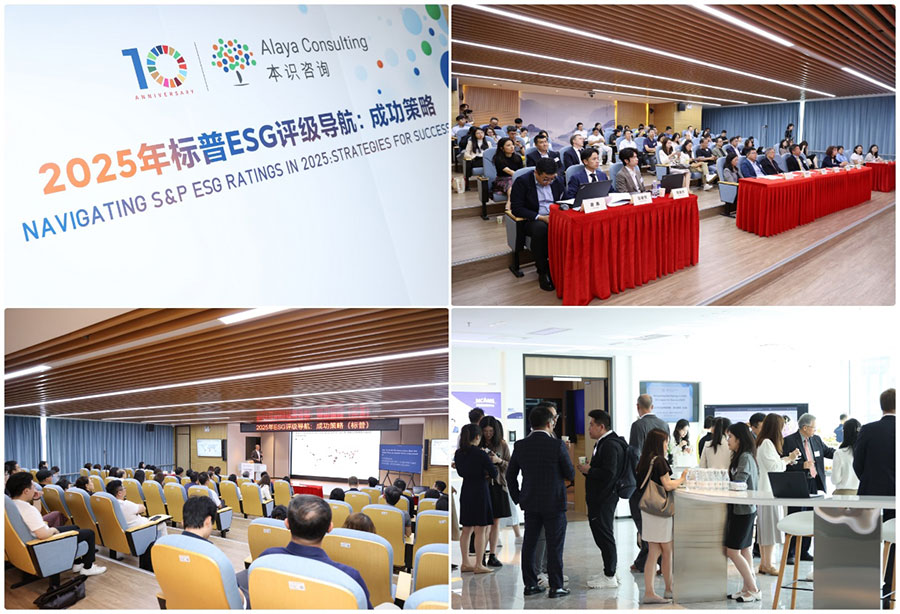
This seminar brought together experts and representatives from the corporate sector, financial institutions, and academia to discuss enhancing corporate ESG performance and leveraging digital tools for ESG management. Participants shared the latest industry insights and practical experiences, fostering a collaborative environment for learning and innovation.
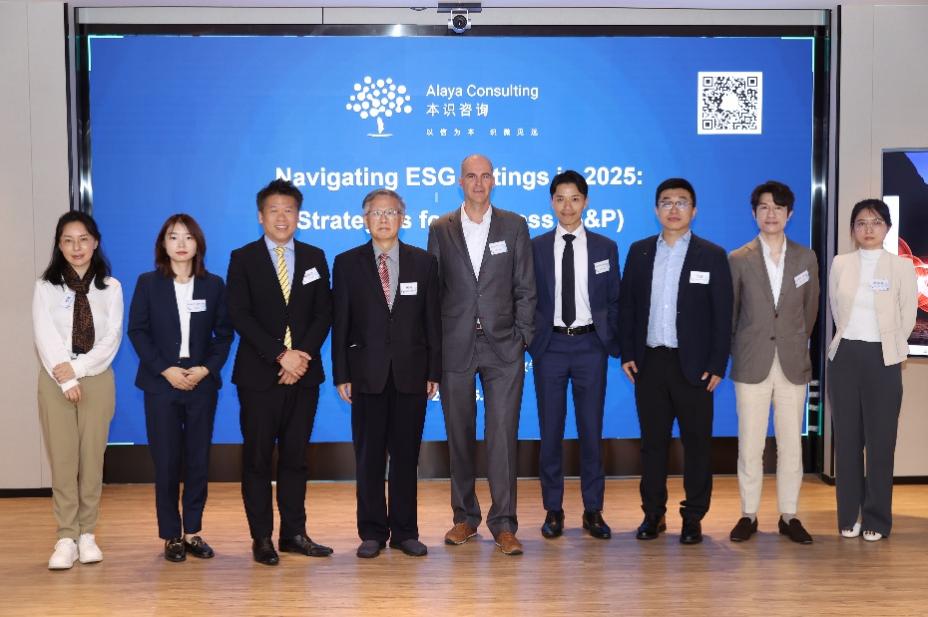

Opening Remarks: Deep Integration of ESG with National Strategies
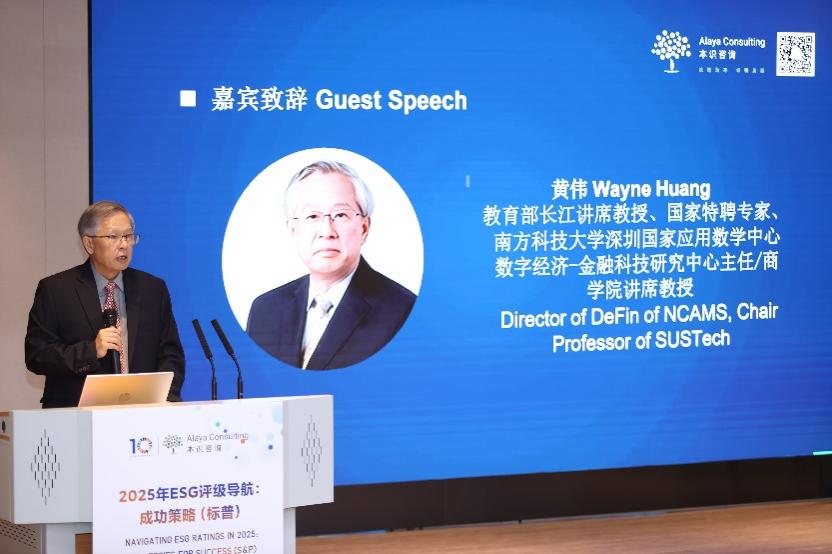
In his opening speech, Professor Huang Wei, Chair Professor at the School of Business of Southern University of Science and Technology and Director of DeFin-NCAMS, stated: “Low-carbon transformation and ESG strategies are not only important issues for national development but also a necessary path for Chinese enterprises to go global.”
He introduced the research achievements of NCAMS in the fields of digital economy and green finance, including the AI-driven ESG intelligent reporting system developed in collaboration with Alaya Consulting – the core modules of this system have been initially developed to help enterprises automatically generate compliant reports.
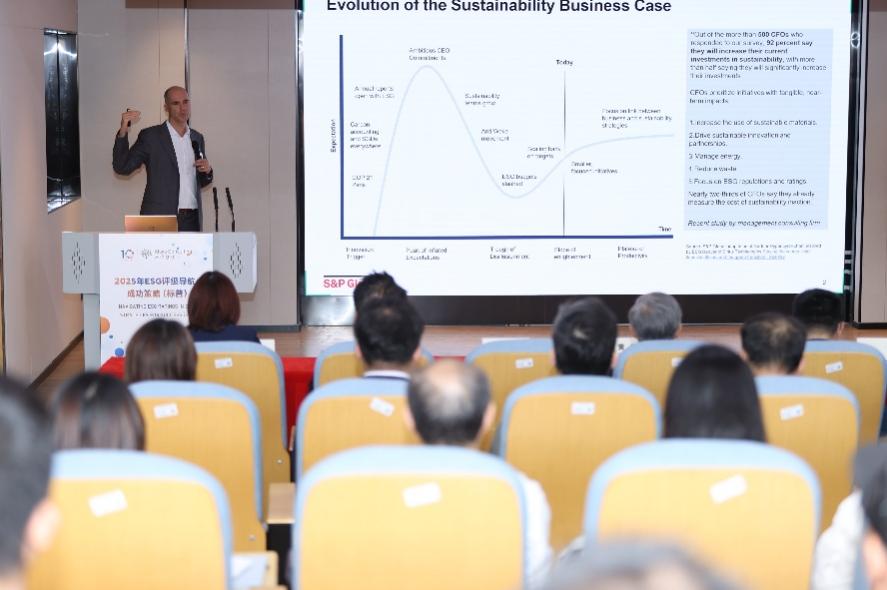
Keynote Speech: The Value and Practice of the S&P CSA Assessment System
Robert Dornau, Head of S&P Global CSA (Corporate Sustainability Assessment), delivered a keynote speech titled How to Improve ESG Performance through S&P CSA. He reviewed the three stages of global ESG development – from concept advocacy to effective implementation, and now to the current integration period of “returning to the essence of business” – and emphasized: “The core value of CSA lies in helping enterprises transform sustainability issues into quantifiable commercial drivers.”
Through case studies, Robert pointed out that enterprises’ transparent disclosures and action commitments in supply chain management, biodiversity conservation, and other areas directly influence investor trust and market performance. He elaborated on the value of the CSA system and its implementation, noting that S&P CSA’s industry-differentiated assessment framework covers 62 industries and over 1,200 data points, with a dynamic weighting system accurately reflecting core industry issues. CSA not only helps enterprises understand their global sustainability performance but also provides important references for investors.
Alaya’s Perspective: Keys to Enhancing CSA Performance
Tony Wong, Founder of Alaya Consulting, proposed five strategies for improving CSA ratings in his special speech: governance structure establishment, material issue identification, data transparency, stakeholder communication, and industry best practice benchmarking. He called on enterprises to “regard ESG as a long-term strategy rather than a short-term task” and shared practical cases of rapidly improving ratings through S&P gap analysis reports, providing feasible operational suggestions for enterprises.
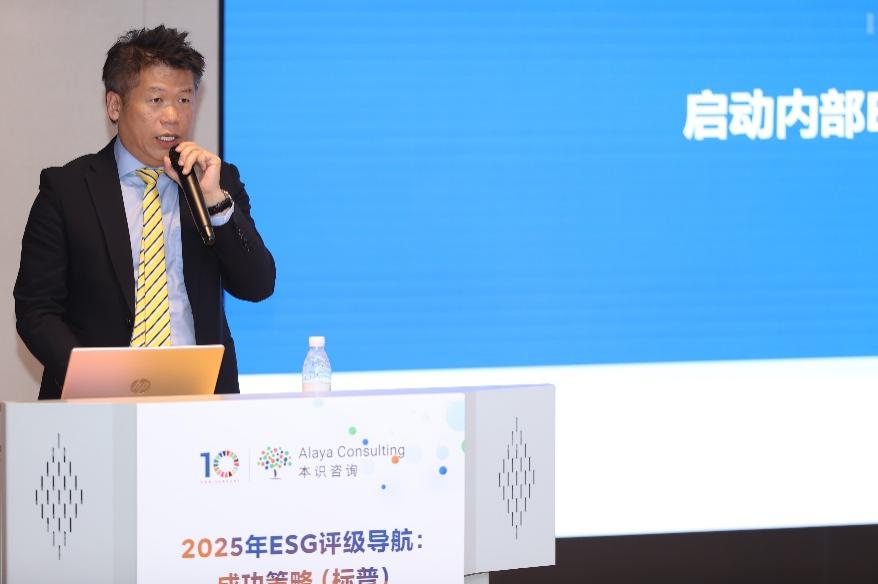
Themed Presentation: Comprehensive Analysis of CSA Participation Strategies
James Ching, Director of Sustainability at S&P Global, analyzed the four steps for enterprises to participate in CSA from a practical perspective: assessing the current situation, benchmarking against the industry, formulating strategies, and continuous improvement, providing effective guidance on how to prepare for CSA.
He emphasized: “CSA is not just a rating tool but also a compass for enterprises to improve governance capabilities. Small and medium-sized enterprises can gradually align with international standards through the S&P CSA Fundamental questionnaire. Enterprises intending to fill out the questionnaire are advised to consult Alaya for relevant project consulting services.”
CSA is not only an external rating tool but also an important basis for guiding enterprises’ internal sustainable development direction and actions. Continuous repeated rating, benchmarking, internal communication, and formulating action plans can progressively enhance overall performance.
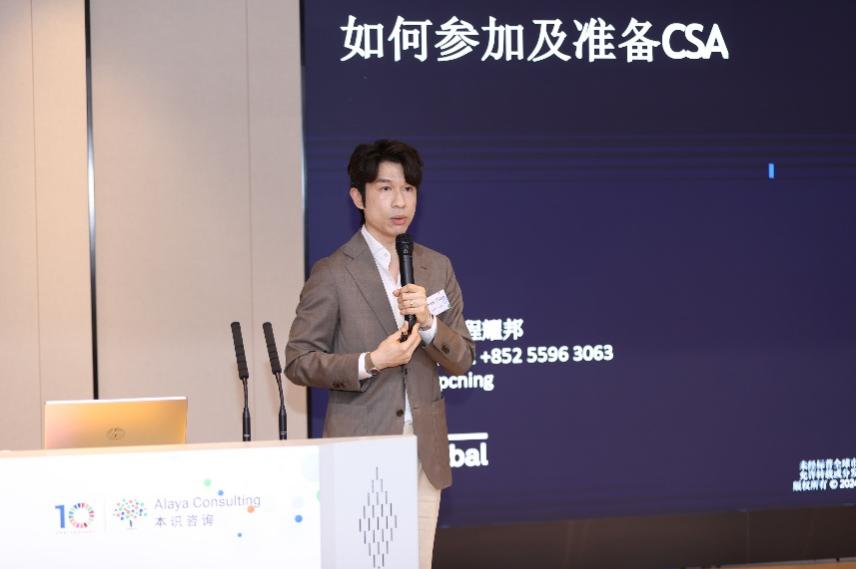
Fireside Chat: Practical Experience of Corporate CSA and Sustainable Practices
In the fireside chat session, Ms. Wang Renxiao, a senior ESG expert from the Sustainable Development Office of BYD, and Mr. Setch Chang, Director of Sustainability Account Management at S&P Global, exchanged views on BYD’s practical experience in participating in S&P CSA ratings and its long-term sustainable development practices.
Ms. Wang introduced that BYD has been deeply engaged in CSR (Corporate Social Responsibility) since 2008, publishing sustainability reports for 15 consecutive years, and officially participated in CSA assessment in 2024 due to global ESG layout needs. By establishing a three-tier ESG governance structure including a board-level strategic committee, a chief sustainability officer, and departmental interface personnel, combined with a cross-departmental interface mechanism and a system library covering over 1,200 indicators, it efficiently completed questionnaire filling and incorporated rating results into internal KPI assessments.
In addition, BYD used S&P’s peer benchmarking tools to accurately identify management shortcomings such as employee care and supply chain carbon footprint accounting, and optimized processes accordingly. She emphasized that CSA is not just an external rating tool but also a core tool for enterprises to deepen ESG governance. Its comprehensive data indicator system and benchmarking analysis functions help BYD improve disclosure transparency and management efficiency in the global competition of the new energy industry.

Academic Empowerment: AI-Driven ESG Intelligent Decision-Making
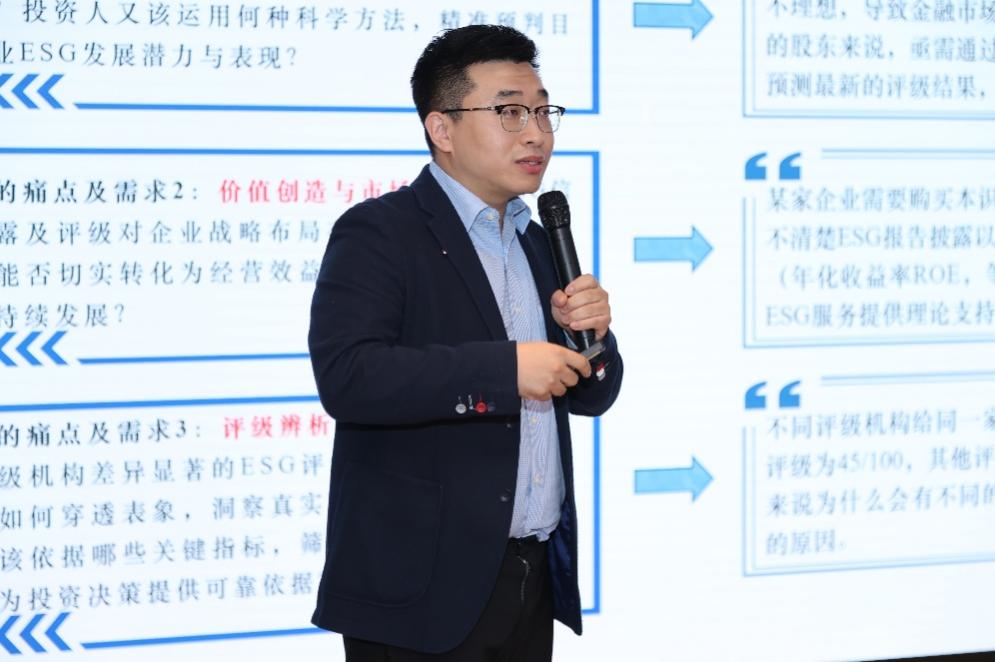
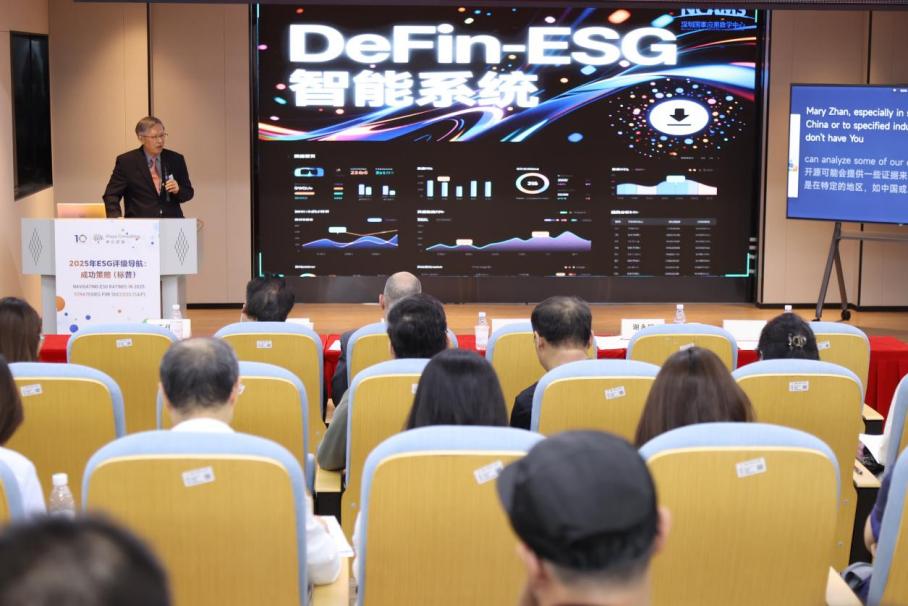
Dr. Tang Xin, Assistant Director of the National Center for Applied Mathematics Shenzhen (NCAMS), and his team demonstrated the cutting-edge research achievements of Southern University of Science and Technology in the ESG field, including a five-dimensional carbon footprint model, an ESG intelligent decision-making system, and carbon reduction optimization projects in collaboration with multiple enterprises.
He particularly mentioned that the AI tool developed by the team and Alaya Consulting can automatically generate ESG report frameworks and predict rating trends by analyzing enterprises’ public data, providing low-cost solutions for small and medium-sized enterprises.
Guest Speech: The Retail Industry and ESG
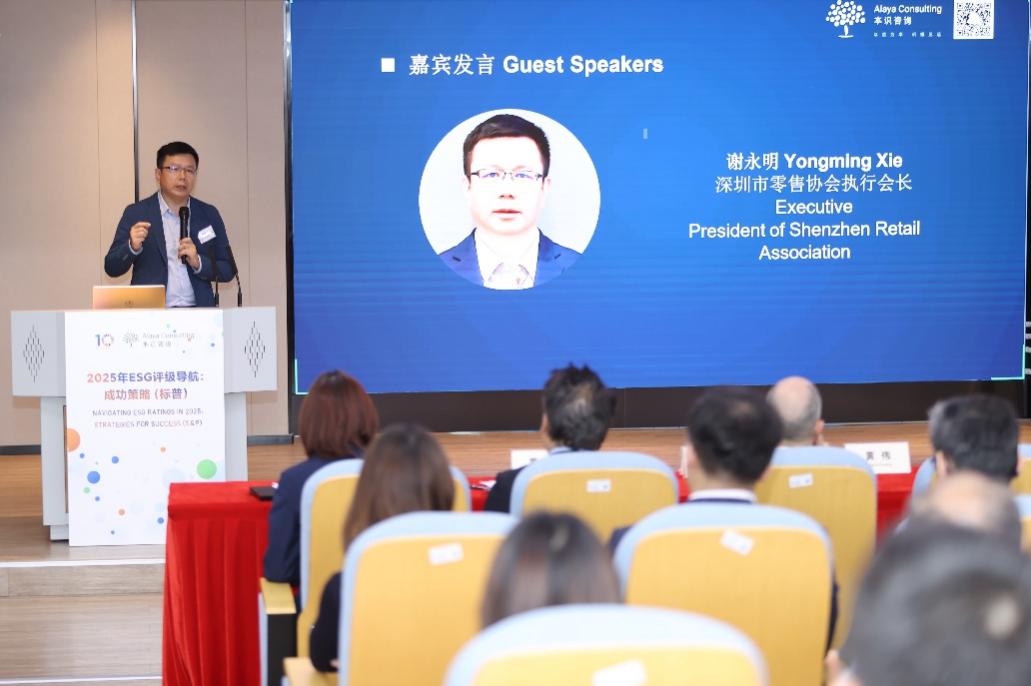
Xie Yongming, Executive President of the Shenzhen Retail Association, shared the connection between digital transformation in the retail industry and ESG from an industry perspective.
He emphasized that the rise of artificial intelligence will reshape the supply model and organizational structure of the retail industry, while ESG standards provide guidance for balanced development. “The key to becoming a century-old brand lies in the deep integration of data capabilities and sustainable development goals.” President Xie also shared the Shenzhen Retail Association’s experience and achievements in promoting corporate social responsibility.
Industry Collaboration: Building a Trust Foundation for the ESG Ecosystem
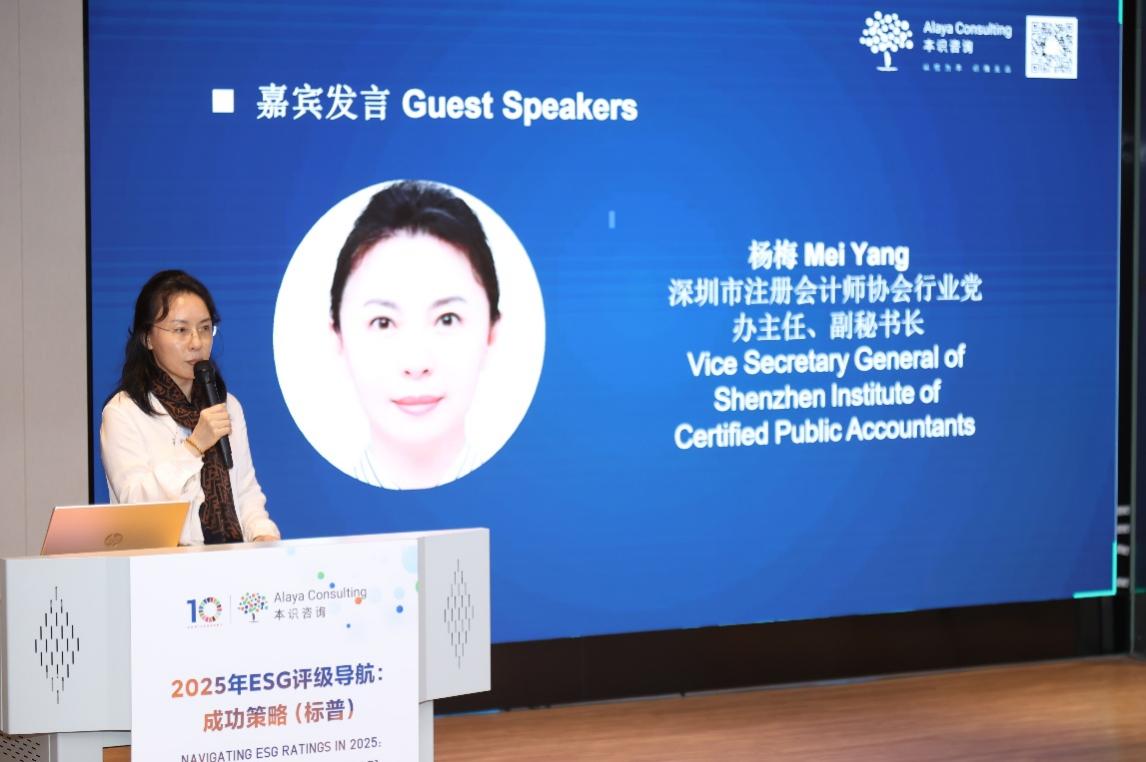
In the closing remarks, Ms. Yang Mei, Director of the Party Office and Deputy Secretary-General of the Shenzhen Institute of Certified Public Accountants, stated that the certified public accounting industry will play a key role in ESG disclosure and assurance. “Authentic and credible data are the foundation for capital allocation and public trust.” She revealed that the Ministry of Finance and the Institute of Certified Public Accountants are advancing the formulation of ESG disclosure and assurance standards, and the ESG assurance standard system will be further improved.
The post Improve S&P ESG Rating appeared first on ESG Reporting and Carbon Advisory in Hong Kong.
]]>Please Enter below detail to download the file
The post Alaya HK ESG Reporting Benchmarking Report appeared first on ESG Reporting and Carbon Advisory in Hong Kong.
]]>